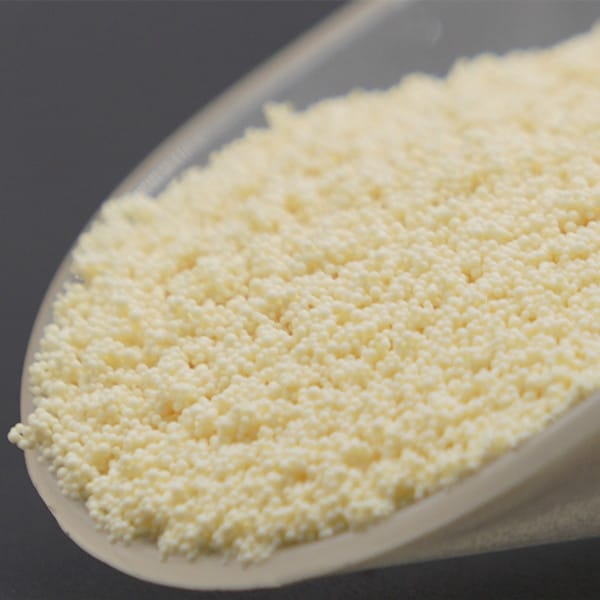
TFI-CLS017 Chelating Resin for Heavy Metal Removal
TFI-CLS017 is a chelating resin designed for applications involving trace heavy metal removal, brine purification, and metal recovery. Its iminodiacetate functional groups help bind selected dissolved metal ions, making it a potential option for specialized industrial water treatment and separation processes.
Selecting the right chelating resin requires more than identifying the metals present in a water stream. Solution chemistry, pH, competing ions, flow conditions, and the required treatment target must also be considered.
What Is TFI-CLS017 Chelating Resin?
TFI-CLS017 is described as a macroporous, weak-acid cation-exchange chelating resin with iminodiacetate functional groups. These functional groups interact with selected dissolved metal ions, allowing the resin to be evaluated for applications where selective metal capture is required.
Unlike a general-purpose filtration medium that primarily separates suspended particles, a chelating resin is intended to interact with dissolved ionic species. Its actual performance depends on the chemical form of the target metals and the composition of the solution being treated.
Key consideration: TFI-CLS017 should be selected based on the actual water or process solution, not solely on the total concentration of metals reported in a laboratory analysis.
Key Characteristics of TFI-CLS017
| Characteristic | Description |
|---|---|
| Resin type | Macroporous, weak-acid cationic chelating resin |
| Functional group | Iminodiacetate |
| Primary function | Selective binding of suitable dissolved metal ions |
| Industrial applications | Brine purification, trace heavy metal removal, and metal recovery |
| Performance assessment | Requires evaluation under the intended operating conditions |
Confirm detailed physical properties, operating limits, regeneration procedures, and other design specifications against the latest manufacturer documentation before finalizing equipment design.
TFI-CLS017 Metal Selectivity in Acidic and Alkaline Conditions
Metal selectivity is an important consideration when evaluating a chelating resin for industrial wastewater treatment or process solution purification. The relative preference for different ions can change with solution chemistry, including pH.
Reported selectivity order under acidic conditions
Cu > V > VO > UO₂ > Pb > Ni > Zn > Cd > Fe(II) > Be > Mn > Ca > Mg > Sr > Ba > Na
Reported selectivity order under alkaline conditions
Ca > Mg > Sr > Ni > Ba > Al > Fe(II) > Cu > Cd > V > W > Na
These sequences represent reported relative selectivity orders; they are not removal-efficiency percentages and should not be interpreted as guaranteed treatment results. Actual metal uptake depends on the metal species present, pH, competing ions, and operating conditions.
In solutions containing several dissolved metals, the presence of competing ions can affect which metals are captured preferentially. This is particularly important when evaluating resin performance against a specific effluent or process specification.
Industrial Applications of TFI-CLS017
1. Trace heavy metal removal from industrial wastewater
TFI-CLS017 can be evaluated for industrial wastewater streams containing dissolved metals that require further reduction after conventional treatment. A chelating resin may serve as a polishing step when the remaining metal concentration is suitable for resin treatment and the water chemistry supports effective binding.
Before implementation, determine whether the metals are dissolved or associated with suspended solids. Filtration, precipitation, or another pretreatment step may be necessary depending on the wastewater characteristics.
2. Chlor-alkali brine purification
Brine purification is an important application for chelating resins because selected dissolved impurities can affect downstream process operation. TFI-CLS017 is listed for applications involving the removal of calcium, magnesium, and strontium from chlor-alkali brine.
The treatment design should consider the brine composition, target impurity limits, operating pH, flow rate, and the requirements of the downstream process.
3. Metal recovery from hydrometallurgical solutions
In hydrometallurgical processing, chelating resins can be evaluated for recovering selected metals from suitable leach solutions. Performance depends on metal speciation, solution acidity, competing elements, and the intended recovery process.
Laboratory testing is recommended before determining the resin quantity, expected recovery, regeneration method, or operating cycle.
4. Electroplating bath purification and metal recovery
Electroplating processes may require solution purification or recovery of selected dissolved metals. TFI-CLS017 is listed for metal recovery and bath purification applications. Suitability should be assessed against the specific bath formulation and process requirements.
How to Evaluate TFI-CLS017 for Industrial Wastewater Treatment
A reliable resin selection begins with a clear understanding of the treatment objective. The following steps help establish whether TFI-CLS017 is appropriate for a particular application.
Step 1: Characterize the feed water
Obtain representative laboratory results for the target metals, pH, total dissolved solids or conductivity, and other relevant water-quality parameters. Where necessary, distinguish dissolved metals from total metals.
Step 2: Define the treatment target
Specify the required outlet concentration for each target metal and the applicable process or discharge requirement. This provides a measurable basis for assessing treatment performance.
Step 3: Assess competing ions
Review the concentrations of other dissolved ions that may compete for resin binding sites. This assessment is particularly important for wastewater and brine streams with complex chemistry.
Step 4: Conduct a laboratory evaluation
Where resin samples are available, conduct suitable batch or column testing using representative feed water. Record inlet and outlet concentrations, pH, contact conditions, and changes in performance over time.
Step 5: Establish the preliminary design
Use verified test results and manufacturer data to estimate resin inventory, vessel dimensions, service cycle, regeneration demand, rinse-water requirement, and spent-regenerant management needs. These values should not be finalized from selectivity order alone.
Information Needed for a TFI-CLS017 Resin Recommendation
To evaluate TFI-CLS017 for a specific industrial application, prepare the following information before requesting a technical recommendation.
- Application type: industrial wastewater, brine purification, or metal recovery.
- Average and peak flow rate, including operating hours.
- Target metal concentrations at the inlet.
- Required outlet concentration for each target metal.
- Feed-water pH and relevant solution chemistry.
- Other dissolved ions that may compete with the target metals.
- Existing pretreatment and filtration processes.
- Operating requirements and available regeneration or waste-handling facilities.
These details help determine whether resin treatment is technically appropriate and which additional tests or design calculations are needed before installation.
Conclusion: Selecting TFI-CLS017 for Metal Removal
TFI-CLS017 is a chelating resin option for selected industrial separation applications, including trace heavy metal removal, brine purification, and metal recovery. Its iminodiacetate functional groups and reported selectivity characteristics provide a starting point for technical evaluation.
For dependable process design, resin selection should be based on the actual feed composition, pH, target outlet quality, competing ions, and verified operating data. Laboratory evaluation and manufacturer consultation can help establish a more defensible basis for resin sizing and performance expectations.
Need a Chelating Resin for Your Application?
Review the TFI-CLS017 product information and prepare your application data for a technical suitability assessment.
Explore TFI-CLS017