
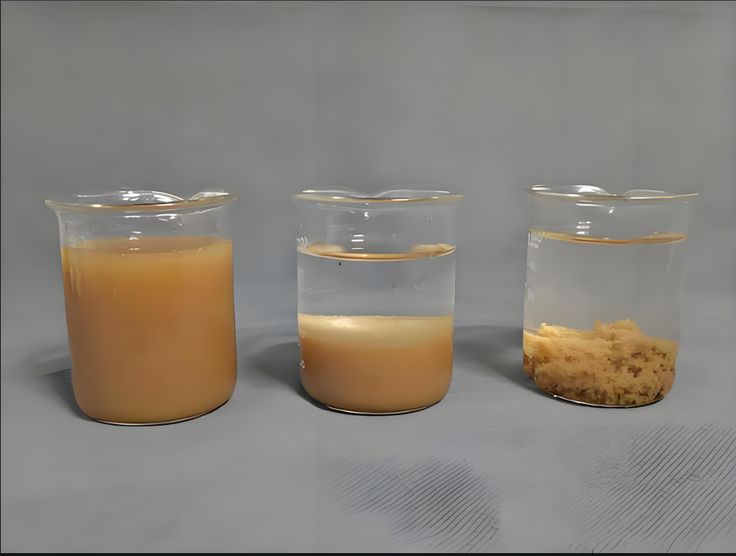
A technical and analytical guide to selecting the optimal polymer flocculant for efficient solid-liquid separation.
The solid-liquid separation process in both industrial clean water treatment plants (Water Treatment Plant / WTP) and industrial effluent facilities (Wastewater Treatment Plant / WWTP) relies heavily on the efficiency of coagulation and flocculation phases. While coagulation focuses on destabilizing colloidal charges, flocculation aims to aggregate microflocs into large macroflocs that settle rapidly or can be easily separated.
The application of long-chain polyelectrolytes, or Polymer Flocculants, is technically proven to accelerate sedimentation rates and enhance the performance of sludge dewatering equipment (such as belt presses, centrifuges, or filter presses).
This article provides a comprehensive technical guide on polymer classification based on electrostatic charge, physical form, and field selection criteria to optimize your plant operations.
Polyacrylamide-derived polymer chains modified to carry negatively charged functional groups (such as carboxylates).
Primary Mechanism: Interacts with positively charged microflocs previously formed by aluminum- or iron-based inorganic coagulants.
Ideal Applications:
Contains high-density positively charged functional groups, typically quaternary ammonium derivatives.
Primary Mechanism: Direct charge neutralization of negatively charged organic particles alongside interparticle polymer bridging.
Ideal Applications:
Neutral polymers lacking significant ionizable groups along their molecular chain.
Primary Mechanism: Physical entrapment of solids based purely on mechanical entrapment and hydrogen bonding (bridging effect).
Ideal Applications: Processing fluids under extreme pH conditions (highly acidic or alkaline) where ionized polymers undergo charge deactivation.
Complex molecular structures incorporating both cationic and anionic groups simultaneously.
Primary Mechanism: Dynamically adapts to fluctuations in the charge density of dispersed solids.
Ideal Applications: Complex industrial wastewater streams with high variations in pollutant load and fluctuating pH levels.
| Technical Parameter | High Specification Characteristic | Operational Implication |
|---|---|---|
| Molecular Weight (MW) | Extremely long polymer chain | Accelerates floc formation rate via bridging, but increases stock solution viscosity. |
| Charge Density (CD) | High number of active sites | Enhances charge neutralization speed; essential for dense biological sludge dewatering. |
| Physical Form (Powder) | Dry granule/powder (100% active) | Cost-effective for transport, but requires a well-engineered preparation/dosing system to prevent clumping (fish eyes). |
| Physical Form (Emulsion/Liquid) | Concentrated liquid form | Very rapid dissolution time (aging time), ideal for high-speed automated dosing units. |
Selecting the correct polymer flocculant type and specification directly impacts effluent clarity, lowers operational expenditures (OPEX), and maximizes sludge dewatering throughput.
Laboratory evaluation and pilot-scale trials are highly recommended to match charge density (CD) and molecular weight (MW) to your plant’s specific wastewater characteristics.
Maximize flocculation efficiency and reduce operational costs (OPEX) across your WTP/WWTP systems with our expert technical team.
Blog Learning Causes of Sub-Optimal Chemical Dosing in Water…
Blog Learning Optimizing Industrial Flocculation with TFI Chemical Optimizing…
Blog Learning About WTP/WWTP Coagulants with TFI Chemical Selecting…
Blog How to Handle Industrial RO Issues with TFI…